 Bonfire
Bonfires are useful to get rid of garden rubbish which won't compost, such as woody pruning, or even trees that you have removed! Bonfires are also fun. It wouldn't seem like autumn without a bonfire, near Bonfire Night if possible.
There is a reason why Bonfire Night is on November 5th. Fires can be dangerous, and they should be built well away from fences or plants, in case those catch fire. They should be on plain soil, with no undergrowth close by. In the autumn, the harvest is over, and hopefully you have cleared enough of the vegetable garden to find room for a bonfire. (If you haven't, then that's one of the autumn tasks!) The weather is turning cold, and is probably wet, so sparks from the bonfire won't set fire to dry vegetation. There is often a touch of cold in the air around the start of November, perhaps even the first frost, which goes well with a bonfire. But everything isn't sodden and freezing cold, which might happen if you leave it until mid-winter.
Set up the bonfire only just before lighting it. Animals such as hedgehogs find a pile of dry wood pleasant to stay, so if you set it up well beforehand, they might not be able to escape once the fire is lit.
Bonfires usually have several stages. At first, if you haven't got it right, it keeps going out! Then it hasn't really "caught" yet, and needs dry twigs to keep going. Then the fire really catches light, in a big blaze, and after that, you should be able to burn damper or greener wood. Finally it dies down into a red smoulder, which is when you can cook on it if you want. It is still extremely hot. That will carry on for a long time, and next day you may find everything burnt! Or more likely, everything in the middle burnt, with wood round the outside still there. Keep those pieces for next year.
So the main task with bonfires is to avoid the "keep going out" stage. Look at what you want to burn and divide it into groups. Everything at all wet or soggy should be put aside for when the bonfire is burning properly. Green wood should also be separated out as that burns less well. What you want is dry wood, dry in the sense of both not green and not damp. And to start a fire, you want thin twigs or similar. It might even be worth keeping this in a shed or a water-proof bin if the weather is really wet. Old raspberry canes are good, or last year's rose prunings (but mind the thorns!) or old fruit tree prunings (but check they aren't still green). Make a heap of this. I also use some old newspaper, fire lighters, or, a wonderful discovery in our local supermarket, a firelighter log, which burns for a long time. Then pile bigger dry twigs around this, even some thicker pieces of wood, but all dry and not green. Light this, and hope it works! Once you have a good blaze, then start adding the rest of what you want to burn, slowly. It is possible to extinguish the fire at this point! But gradually the fire gets hotter and hotter, and it can dry out then burn damp stuff and green wood. Success!
While it's burning, make sure that stuff round the edge gets pushed into the fire. We have some metal pipes or fence posts which we use as pokers. You do this, partly to get everything burned, but also to make sure that the fire doesn't "walk" in particular direction, but stays where you want it to be.
We cook marshmallows on the fire, by sticking them on skewers and holding them to the hot part of the fire. It is very hot too close to the fire, so be careful. And also be careful about burning your mouth. Some people cook potatoes by wrapping them in foil and putting them in the hot ashes. But they will take some time to cook.

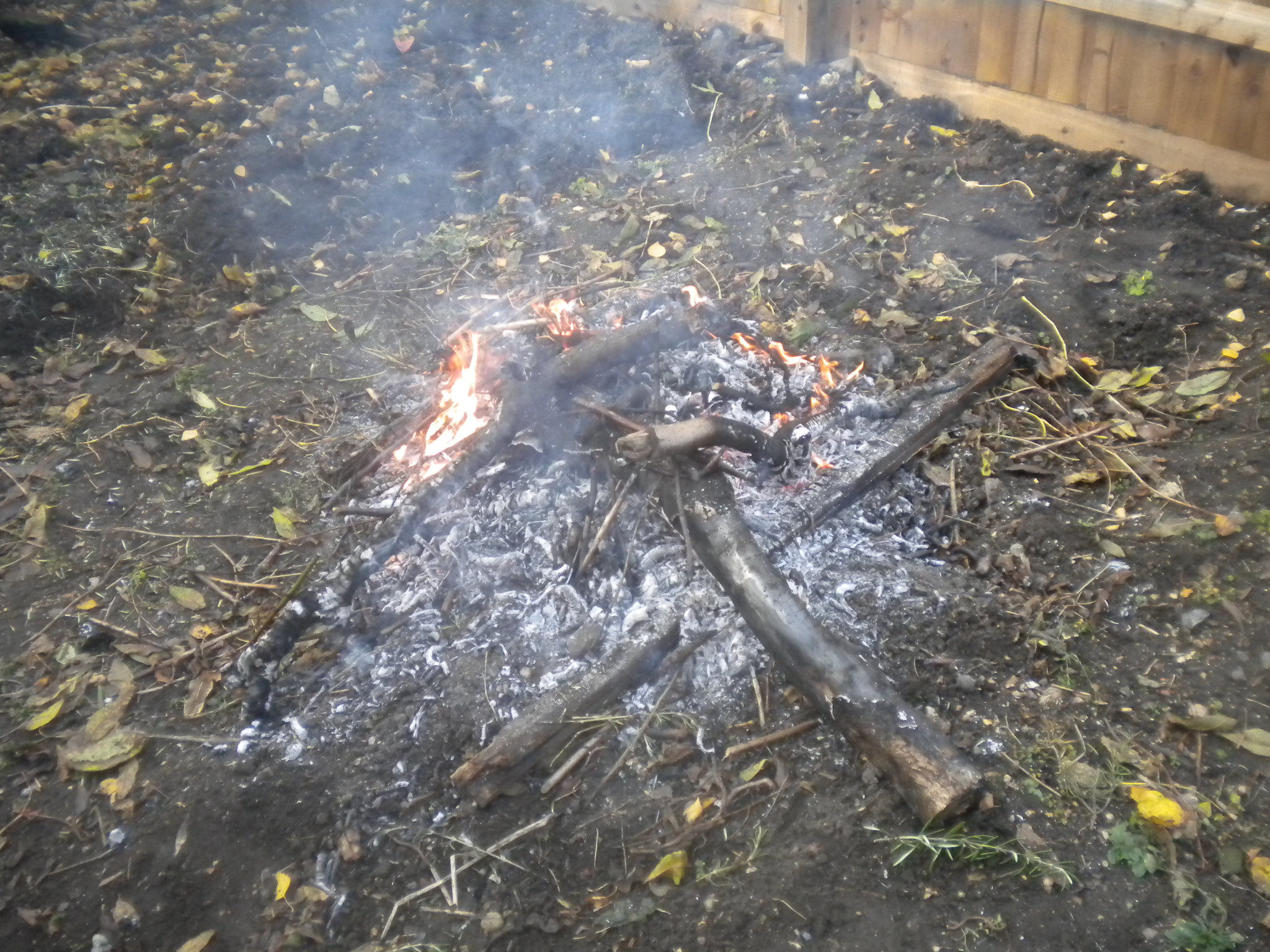
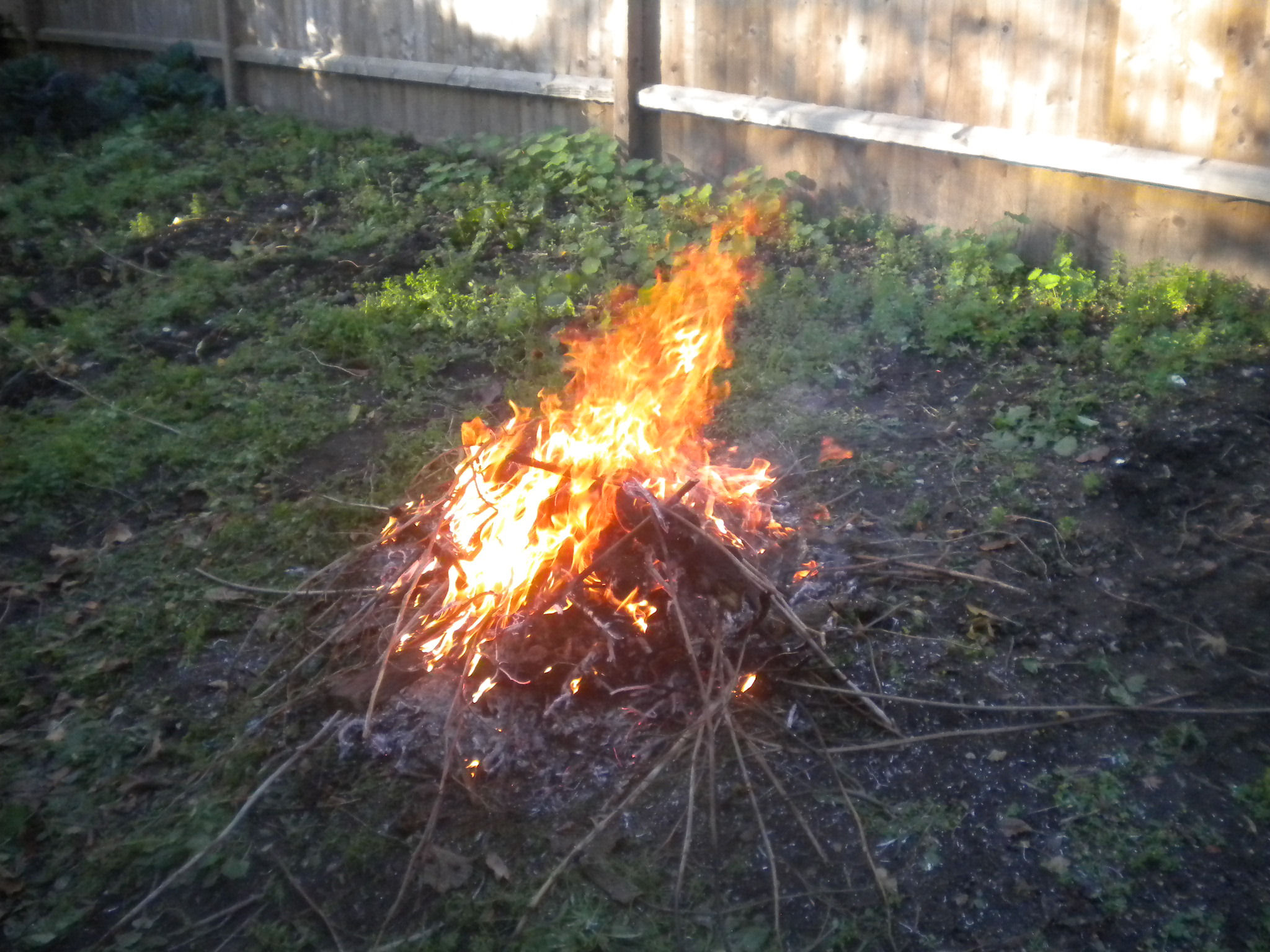

Click on photos for large version.
© Jo Edkins 2021 - Return to Garden index