

Rose ground is well known. But it can be made with different stitches. So I wanted to try out different combinations to see what they looked like.
Pattern:

Bobbins: 14 pairs
Style: Torchon (experimental)
Size: 9.25 inches long
Stitches:
half stitch
cloth stitch and twist
cloth stitch
twist single pair
Details:
cloth strip (red)
rose ground of various types (green)
rose ground edge
Description:
The different versions of rose ground are separated with 2 rows of cloth stitch.
Rose ground has different parts. There are the cross-over stitches (without pins) round the edge, and stitches with pins in the centre. We need to understand something about lace stitches before we start. A cloth stitch and twist is two half stitches on top of each other.So you can describe a Torchon ground stitch (half stitch, pin, half stitch) as a cloth stitch and twist with a pin in the middle. This is a common type of rose ground. However, there is rose ground which uses double Torchon ground stitch. So I wanted to permute the following:
Cross-overs: half stitch (CT), cloth stitch and twist (CTCT), double cloth stitch and twist (CTCTCTCT)
Central: half stitch pin (CT pin), half stitch pin half stitch (CT pin CT), cloth stitch and twist pin cloth stitch and twist (CTCT pin CTCT)
1. This is what I think of as "standard" rose ground: Cross-over - cloth stitch and twist (CTCT). Centre half stitch pin half stitch (CT pin CT). It looks quite square.
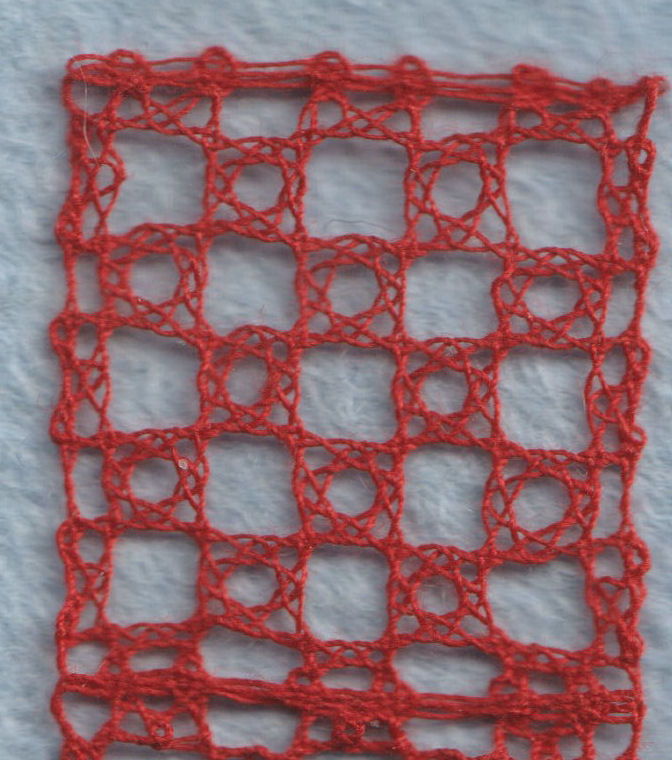
2. Double everything up: Cross-over - double cloth stitch and twist (CTCTCTCT). Centre cloth stitch and twist pin cloth stitch and twist (CTCT pin CTCT). The centre looks zigzaggy. The crossovers look like small plaits (which is what they are!)
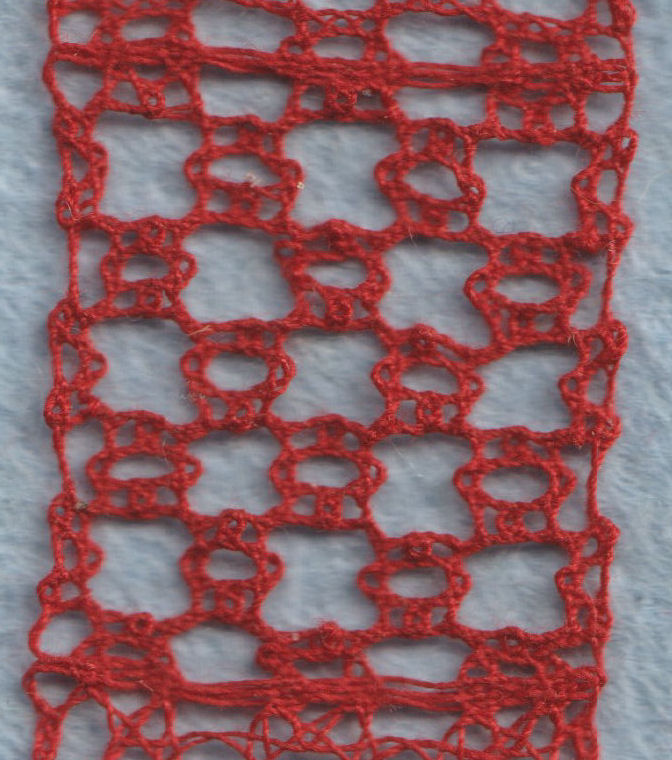
3. Halve everything instead: Cross-over - half stitch (CT). Centre half stitch pin (CT pin). This is rather pretty, with flowing lines. But the central stitches merely rest on a pin rather than the pin being in the middle of the stitch. You can see this weakness round the edge.
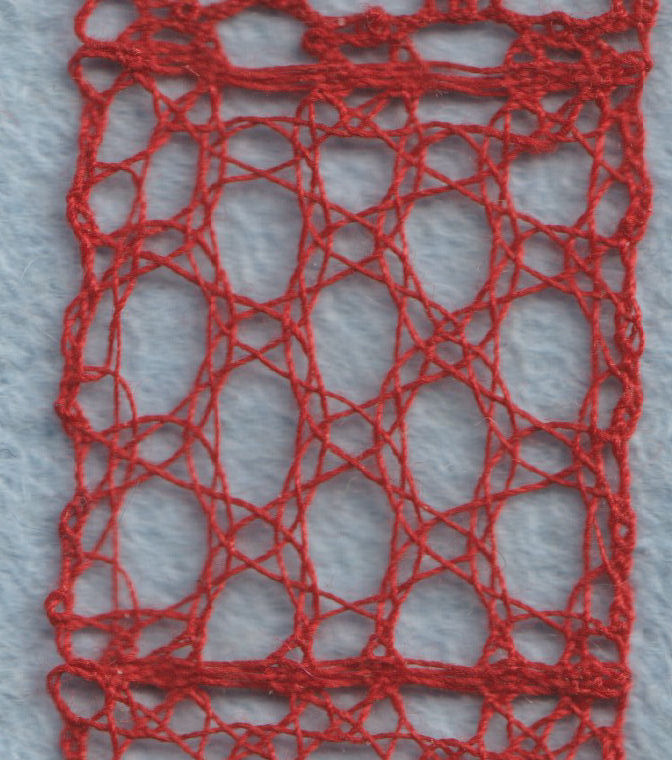
4. Now I combine different versions of the above. Cross-over - half stitch (CT). Centre half stitch pin half stitch (CT pin CT). The centre is standard rose ground, but the half stitch cross-overs breaks up the square look.
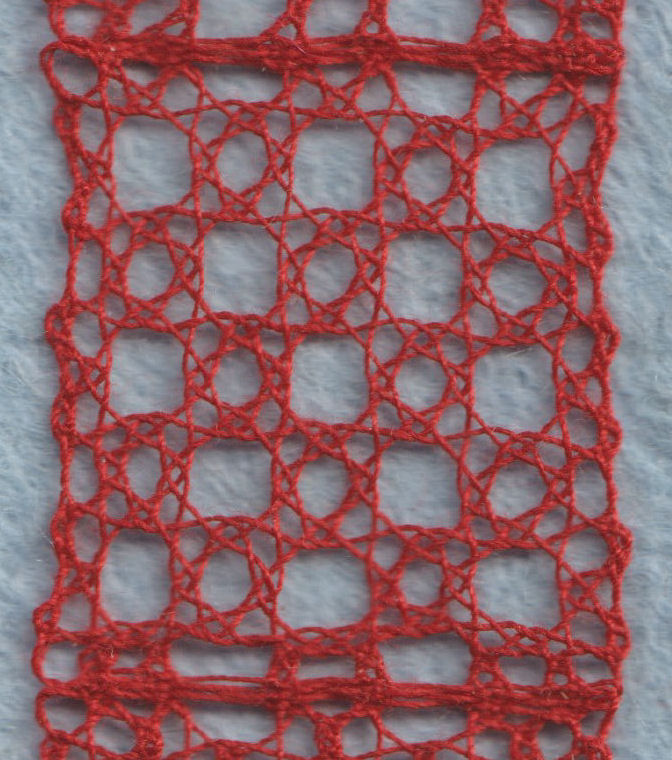
5. Cross-over - half stitch (CT). Centre cloth stitch and twist pin cloth stitch and twist (CTCT pin CTCT). So thew zigzaggy centre but open cross-overs. Perhaps a stitch to use if you want to puzzle people what you've done!
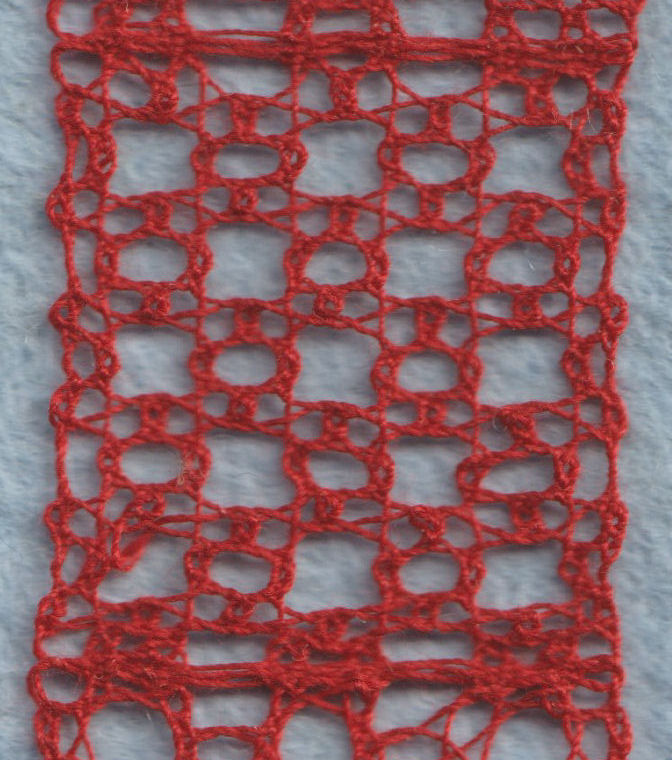
6. Cross-over - cloth stitch and twist (CTCT). Centre half stitch pin (CT pin). The half stitch resting on a pin definitely shows weakness here, as the top of the centre looks different from the bottom.
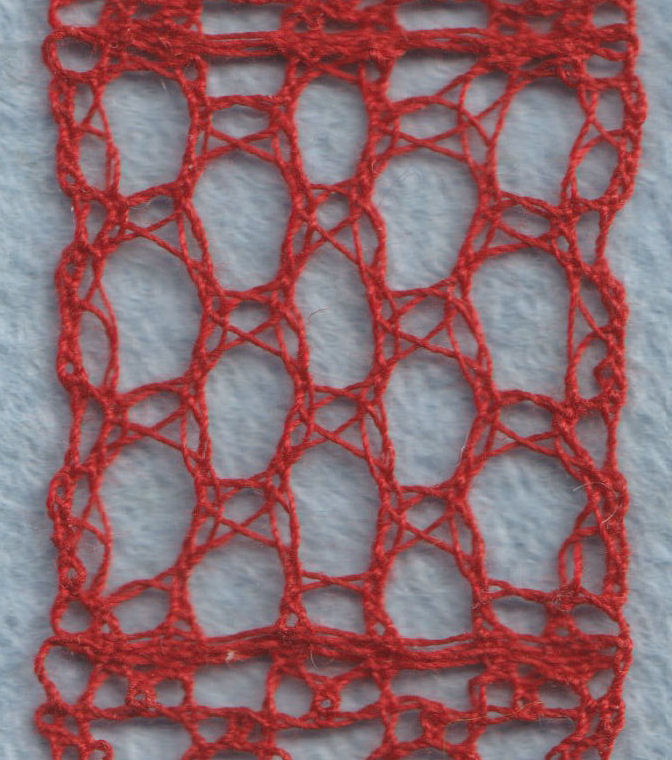
7. Cross-over - cloth stitch and twist (CTCT). Centre cloth stitch and twist pin cloth stitch and twist (CTCT pin CTCT). I have seen this in a piece of lace. I call it double rose ground.
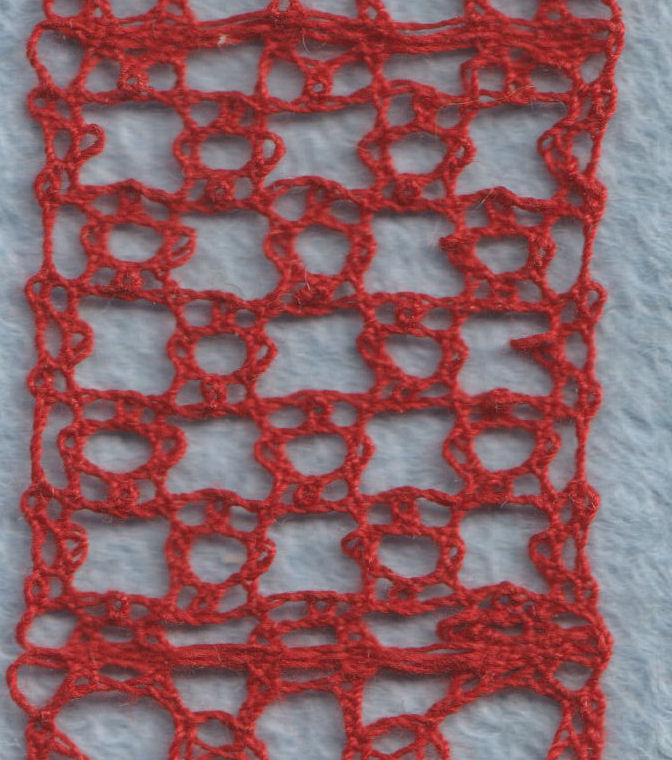
8. Cross-over - double cloth stitch and twist (small plait). Centre half stitch pin (CT pin). We are definitely wandering away from rose ground here! It hasn't helped that I made a mistake or two. But again, you could use this to puzzle people!
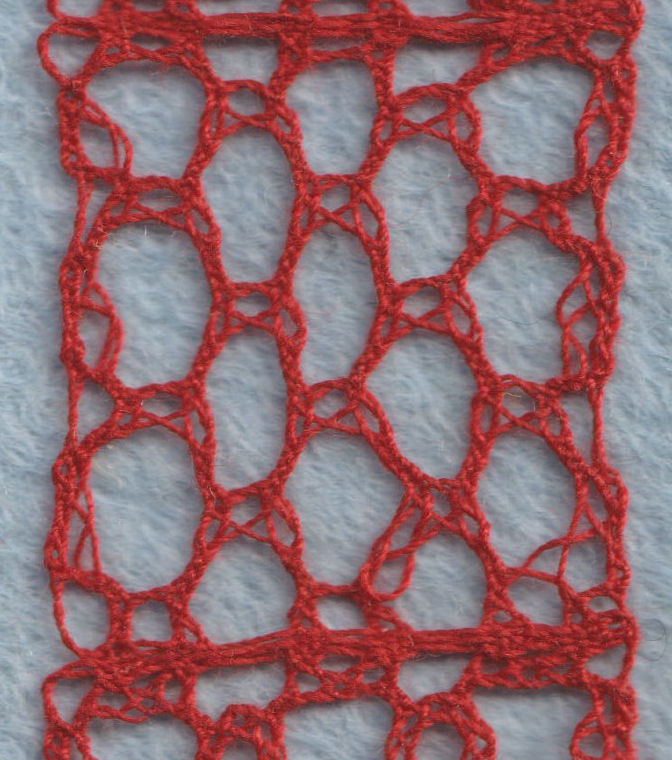
9. Cross-over - double cloth stitch and twist (small plait). Centre half stitch pin half stitch (CT pin CT). I have done this before! The problem with rose ground is remembering to do one cross-over between the centres, and not two. A beginner did two cross-overs on top of each other (so each rose ground unti was exactly the same). I thought it looked rather attractive! It forces the centres further away from each other, giving them a more rounded look. I call it plaited rose ground.
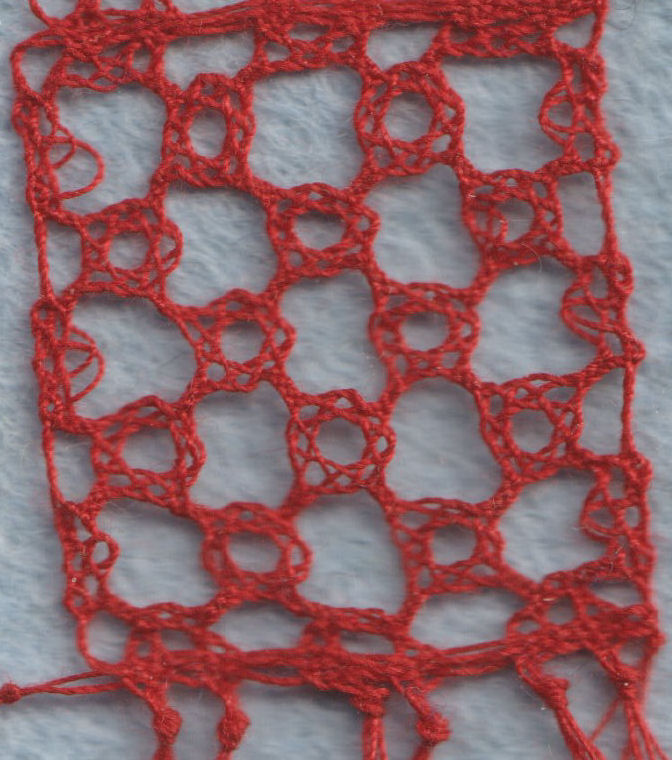
These are the ones that I think might be worth trying out. (You may differ!)
1. "Standard" rose ground: Cross-over - cloth stitch and twist (CTCT). Centre half stitch pin half stitch (CT pin CT). Square.
3. Half stitches everywhere: Cross-over - half stitch (CT). Centre half stitch pin (CT pin). Flowing lines. But be careful how it fits into edges etc. Maybe a Torchon ground stitch or so as filler.
4. Standard centre, but half stitch cross-overs - Cross-over - half stitch (CT). Centre half stitch pin half stitch (CT pin CT). Definitely a different effect to standard rose ground.
5. Double centre, but half stitch cross-overs - Cross-over - half stitch (CT). Centre cloth stitch and twist pin cloth stitch and twist (CTCT pin CTCT). A different effect to double rose ground.
7. Double rose ground - Cross-over - cloth stitch and twist (CTCT). Centre cloth stitch and twist pin cloth stitch and twist (CTCT pin CTCT).
8. Cross-over - double cloth stitch and twist (small plait). Centre half stitch pin (CT pin). Just because it's so weird!
9. Plaited rose ground - Cross-over - double cloth stitch and twist (small plait). Centre half stitch pin half stitch (CT pin CT).
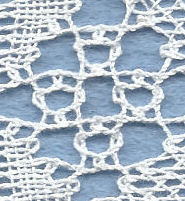
Close up of the lace, so you can see the working in more detail.

© Jo Edkins 2026 - return to lace index