

See Crosses for other patterns.
Pattern:
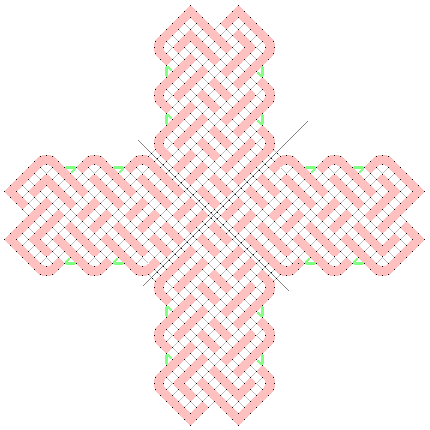
Bobbins: 22 pairs per arm
Style: Torchon
Stitches:
half stitch
cloth stitch and twist
cloth stitch
twist pair
plait (green)
slip knot
overhand knot
Details:
cloth zigzag (red)
chevron pointing downwards (red)
cross, starting from middle
Description:
Pattern:
Follow the links above for explanation of how to work the different parts of the lace.
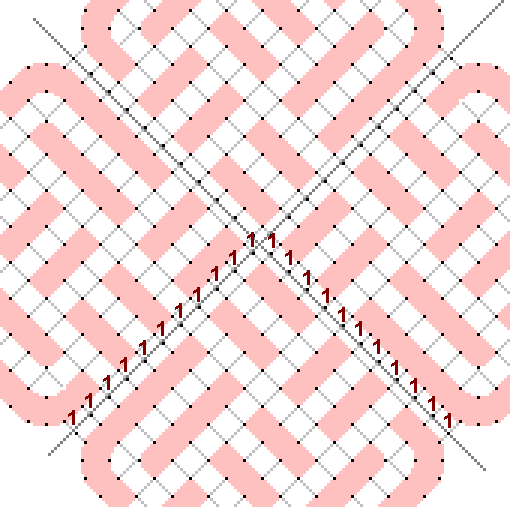
See cross, starting from middle for different ways to make this shape. I worked this pattern one arm at a time, with starting pairs as below.
When I came to work the second arm, I threaded half the new threads through pinholes in the first arm (using a needle) before winding them onto bobbins. As you can see from the photo, I made rather a mess of it! In fact, it was working this pattern that led me to figure out how to take the threads across the centre rather than starting again. Choose whichever method you want. After all, it's possible to use the 'pinhole' method without making a mess of it!
Celtic crosses can have complex Celtic knots on them, and I wanted to reproduce this. It is mostly worked as cloth stitch strips.
Some Celtic knots have double strands (see my Celtic knot website). This has the advantage that you can pack everything closer together, so there isn't that annoying Torchon ground stitch, which means you keep having to work a bit of cloth stitch, then a bit elsewhere, then the Torchon ground stitch, then more bits. On the other hand, the basic strand is very narrow, which means that the pattern itself is not very clear. (If I had made the strand thicker then there would have been too many bobbins for my liking).
Another problem with the thin strand is that if I had worked it with the normal number of threads, there would have been no threads left to turn the corner at the edge. So I introduced a couple of extra pairs of threads on each side. If you look closely at the pattern, you will see green lines at the edge. These are not pairs of threads twisted, like the rest of the pattern. They are two pairs of threads, plaited as legs. This gives enough threads for the cloth stitch at the edge (two pairs of passives and a worker pair).
The single pairs of threads joining the cloth stitch are twisted three times, to push the strands as far apart as possible.
© Jo Edkins 2017 - return to lace index